


By Gbayesola Samuel
The state of electricity at the University of Ibadan has raised serious concerns, affecting both learning and living experiences of the students.
Despite being essential to their academic endeavors, UI students are currently faced with erratic power supply, especially across the Ring 5 axis of the University, which include the Great Independence, Nnamdi Azikwe, Obafemi Awolowo and Sultan Bello Halls of Residence.
 The situation has been worsened by a recent blackout at Kenneth Mellanby and Lord Tedder Halls, leaving the student residents of both halls with a prolonged electricity disconnection for about over 6 days before it was fixed.
 Fresh students also had their early taste of these challenges during their matriculation ceremony, experiencing both a power outage and water scarcity.
Discontented Voices
Decrying the development, Jafet Samuel, a student of Counseling and Human Development Studies, Faculty of Education, told IndyPress the erratic power has had ripple effects on his academics.
He said, “Right now, I feel very bad because currently we are not having light. There was no light yesterday, they brought it this morning again, and they took it again. The electricity at the hall is now bad.”
“In my 100 level, it was very, very good. I could remember when we resumed then, we enjoyed stable electricity. We did have light for days.”
He added that the frequent outages now affect his reading routine at night.
“Something about me is that I like seeing light while I read. Even when I use a flashlight, I still feel somehow. Seeing the bulb turned on makes me feel more focused.”
Samuel further linked the electricity state to possible causes, including what he described as its high consumption.
“Maybe they are working according to the plan they’ve set already, like there will be hours whereby they will distribute light. Or maybe there are too many appliances consuming too much energy.”
 He also decried what he claimed to be the University’s infrastructural deficiencies, stating, “Someone was saying that Ring 5 or the transformer is not that good and they do not repair it constantly. I have not seen any replacement so far.”
Speaking to IndyPress, another student, Sophia, shared that she has been adversely affected by the frequent outages since her resumption to campus three weeks ago.
“At some point, it gets stable and at some point, it becomes unstable. As for yesterday, it was kind of unstable. During last week too, same thing.”
She noted that outages often occur at a time power supply is most needed by students.
“Sometimes people actually need it for reading and to do other stuff, but it gets bad at some point when people actually need it the most.”
Reflecting on the consequential effects of the development,she added,“It has been bad at some point, and not just for me, for others too.”
A 200-level student of Industrial and Production Engineering who prefers to be anonymous also corroborated the effect of the electricity state on students’ academic productivity and daily routines.
“Lack of electricity on campus makes things difficult for students. It reduces efficiency in reading and studying and even affects normal day-to-day activities like cooking.”
He observes that as the situation persists, he leaves students with the difficulty of powering their gadgets, which are much essential to their personal studies.
“Not everyone has the money to purchase a power bank. So, this has left us with no choice than to borrow power banks from fellow residents.”
He further complained about what he described as unequal distribution of power supply, stating that some halls of residence experience outages more than others.
He said, “What I’ve noticed about electricity in Nnamdi Azikiwe Hall is that it spoils more frequently than it does in other hostels. Even when campus electricity is okay, sometimes Nnamdi Azikiwe Hall doesn’t have a power supply.”
“Most of our materials are in soft copy format, and without our devices we will not be able to access that. So it restricted me a lot.”
Enebuku, a student of Human Nutrition and Dietetics who claimed to have spent less than a year in the hostel, told IndyPress that he is not much affected by the frequent outages as he has access to solar.
However, she complained that he has been suffering from poor ventilation due to the frequent outages.
“There is solar in my hostel, so there’s the reading room and the reception where there’s a place to charge.
“There was no water before I left the hostel. It was the reservoir we had to fetch water from.”
‘Team Deligent’ Speaks
In an interview with IndyPress on March 11, 2026, the student Union House Secretary, Tifase Oluwatimilehin, confirmed the reason behind the persistent blackout.
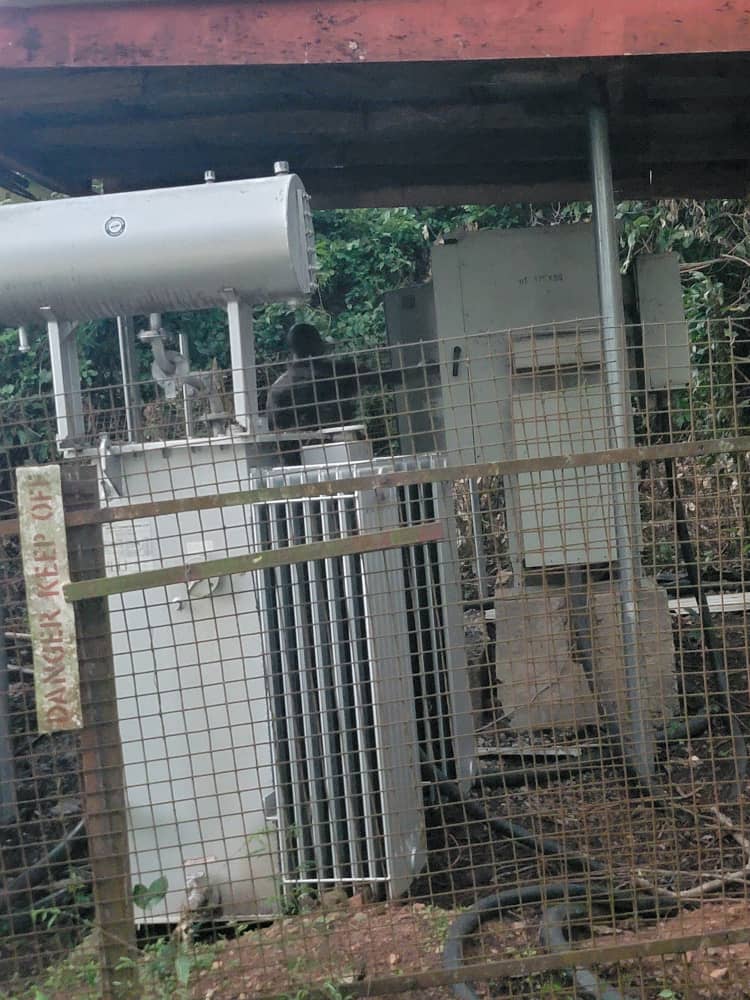
“The ring 5 transformer currently has a fault and sudden restoration of light can only be possible if it is repaired,” Tifase told IndyPress.
“The low current was supplied by IBEDC and the Ring 5 electrical transmission could not transmit the power because it was on low current. However, it was transmitted in other school areas, and this is because the other Rings are in perfect condition. The Ring 5 transformer has undergone a lot of repairs over time due to subsequent explosions or subsequent faults,” he added.
 He further disclosed that efforts towards addressing the concerns are being made by management of the University of Ibadan.
Relentless Efforts by IndyPress to obtain comments from the Director of Work and Maintenance regarding the issue were unsuccessful as of press time.
The Public Relations Officer of IBEDC, Mr David, generally acknowledged the shortage in the power distribution, while urging IndyPress to confirm from the University management if the issue is internal.
“I would suggest you first contact the University Management to ascertain if the issue is internal, since you said there is no power currently, and the issue only affects a part of the university. It could be that they are doing internal load shedding or energy management, as the case may be,” he said.
“Although generally there has been a drop in power supply in recent times, which we have been communicating to customers, you need to find out what specifically is affecting the University.”
Meanwhile, the reason for the recent outbreak at Kenneth Mellanby and Lord Tedder Halls of Residence area is yet to be officially communicated as of press time, although ‘Team’ Deligent’, the Adeboye Temidayo-led Students’ Union Executive Committee, had earlier confirmed through a circulated flier that the faulty transformer allocated to the affected halls would be fixed.
The residents of the two halls in question have suffered total blackout since April 3, 2026, severely affecting their academic activities and overall learning conditions
The situation, according to the affected students who spoke to IndyPress, demands that the persistent blackout is addressed with all sense of urgency it deserves.
Given their responsibility to address students’ concerns, all necessary stakeholders, including the University of Ibadan Dean of Students, Students’ Union Executive Committee, and Department of Works and Maintenance must take decisive decision to provide a lasting solution to the lingering blackout, as it continues to undermine both the living and learning experiences of the students.
Until clearer answers emerge, the question still remains: on UI Ring 5, what is the way out?


You must be logged in to post a comment.