


By Priscilla Oyedele
Not long ago, breaking into the music industry meant one thing: you needed a record deal. Without one, your music stays local with low visibility, and financial constraints hit you hard in your quest for better musical promotions. Also, your career depended almost entirely on who you knew in the music space or which radio presenter owed you a favour. That world has changed dramatically, and social media is the reason for this.
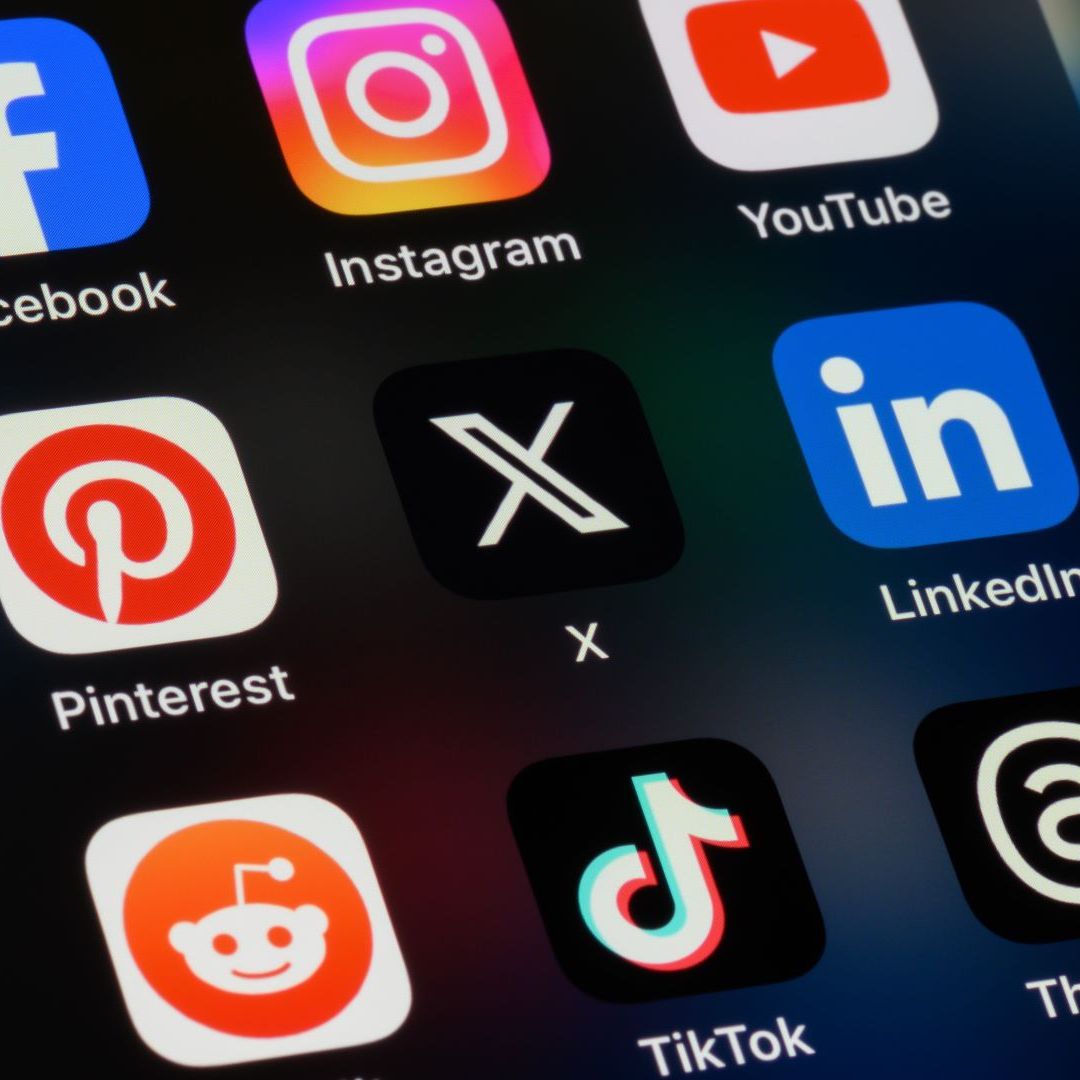
Today, platforms like TikTok, Instagram, YouTube, and X (formerly Twitter) have become the new gatekeepers and a wider platform for expression, unlike the old ones, they do not decide who gets in. An upcoming artist from Lagos can upload music from a remote location and wake up to a virality they never had to beg for.
This transition has been particularly visible in Nigeria. Take Fuji music for instance, it was a genre that once lived almost entirely in the energy of live performance and physical cassettes.

Artists in that space, alongside independent acts across different genres, now share their work online, reaching listeners far beyond neighbourhood borders. The internet did not just give them a platform. It gave them a market.
Promotion Without a Label
Before social media, promotion followed a rigid path. You needed a label to get on the radio. You needed a radio to get noticed. You needed to get noticed before anyone would sign you. The cycle locked out more talent than it let in.
In Nigeria of the 1980s and 1990s, music travelled on cassette tapes passed between hands, played on radio stations that decided whose voice the public would hear, and performed at live shows where an artist either moved a crowd or went home unknown. There was no algorithm to push the content published by this artist. Visibility belonged to whoever could afford studio time, whoever had a connection at a radio station, and whoever a record label decided was worth investing in. For everyone else, talent alone was not enough.

By the early 2000s, the compact disc had replaced the cassette, television had joined radio as a gatekeeper, and the music industry in Nigeria was beginning to find its footing as a proper commercial enterprise. But the fundamentals had not changed. If you were not signed, you were not heard. If you were not heard, you did not exist.
That barrier is largely gone. An upcoming artist with no record deal can post a 60-second clip on TikTok today and have 200,000 streams on the full track by Friday. Artists now upload music directly, engage fans in real time, and build communities around their work without waiting for industry permission.
This direct connection bypasses the traditional filters of the industry.
Beyond music itself, social media has made artists more accessible as people. Fans follow the process, not just the product. A studio session posted to Instagram Stories now drives the desired traffic, conversations can be built around trending issues including songs on X, and a candid moment on TikTok is enough to break into virality. Many of these are the things that have become possible with these social platforms that turn casual listeners into loyal followers. That kind of intimacy was impossible to manufacture through a radio interview or a magazine profile.
When a Song Goes Viral
TikTok in particular has rewritten how music travels. A sound attached to a trending challenge can move through millions of feeds in days, reaching people who have never heard of the artist and may never have found them through traditional channels. The algorithm does not care about record label budgets. It responds to engagement.
According to a report by Soundcamps, three quarters of TikTok users discover new songs on the platform, making it the number one place for music discovery globally. More telling, TikTok-correlated artists see an 11 percent week-on-week streaming growth rate, compared to just 3 percent for others.
Case Study: “Buga” by Kizz Daniel (feat. Tekno)
Buga was released on May 3–4, 2022, and within roughly two weeks it indeed became the most Shazamed song in the world, a milestone officially acknowledged by Shazam. The track also sparked a massive viral TikTok dance challenge in which people showed off by shrugging their shoulders. On the streaming and chart front, “Buga” dominated major platforms across Africa. It also reached number one on Apple Music in several countries, including strong performances in Kenya and Nigeria, and it broke records on Boomplay by hitting one million streams extremely quickly (actually within the first 24 hours, which is even faster than the claimed seven days).
On YouTube, the second largest search engine, the official music video was widely described as Africa’s fastest-growing video at the time, amassing around 43 million views in just 46 days after release.

This breakthrough did not happen through traditional marketing alone, but through user-generated content like TikTok challenges, shares, and other organic reach methods.
Similarly, Nigerian artists like Tekno have since maximized these platforms, as have many other musicians, to promote their videos and gain more traction on streaming platforms.
More interestingly, TikTok’s “Add to Music App” feature has generated over one billion track saves to Spotify and Apple Music since its 2024 rollout. With millions of listeners generated from this effective audience funnel, viral success is no longer just a matter of luck.
In recent times, several artists have seen their older catalogues resurface years after release simply because a creator used their song in a video that caught fire. For independent artists especially, that kind of exposure is career-changing.
But there is a catch. Many listeners, particularly younger ones, engage with the snippet and move on. High stream counts do not always translate to genuine fanbase growth. An artist can have a viral moment and still struggle to fill a small venue three months later.
The Cost of Being Online
The pressure social media places on artists is real and it is worth saying plainly. Platforms reward consistency. That means posting regularly, chasing trends, and producing content that performs, whether or not it reflects what the artist actually wants to say.
Many musicians have spoken openly about feeling more like content creators than artists. The daily demand of maintaining a social media presence competes directly with the time and mental space that creative work requires. When your metrics become the measure of your worth, the anxiety that follows is not surprising.
The comparison culture that social media breeds makes this worse. An artist watching another act’s post outperform theirs is not just experiencing professional envy. They are getting real-time data that can make them question their direction, their sound, and their value. That is a heavy thing to carry alongside the work of actually making music.
What Has Been Lost
Social media’s rise has come at a cost to traditional media. Radio and television, once the primary vehicles for music promotion, have seen their influence shrink significantly. For some genres and demographics, they remain relevant. But the general drift is clear. Audiences have moved, and the industry has followed them.
Album sales, particularly physical ones, have taken a serious hit. Streaming has largely replaced the purchase model, which has restructured how artists earn. For those still dependent on physical sales, the financial pressure has been considerable. The album as a listening experience, something you sit with from track one to the last, has also lost ground to the single-driven, playlist culture that streaming encourages.
The Bigger Picture
Social media has genuinely democratised access to the music industry. That is not a small thing. Talent that would have stayed invisible a generation ago now has a real path to an audience. The tools are available, the platforms are open, and the gatekeepers have lost much of their power.
Yet, it is worth saying plainly that democratisation is not the same as liberation. The relentless pressure to perform for algorithms, the significant mental health toll, the often shallow nature of viral engagement, and the steady erosion of the album as a cohesive experience are the heavy trade-offs that artists and the industry at large are still struggling to navigate.
The artists navigating this landscape most successfully are those who have learned to use social media without being consumed by it. That balance is harder to strike than it sounds.
ABOUT CONTRIBUTOR
Priscilla Oyedele is a 300-level English student, part-time writer, who loves reading during her leisure time.
You must be logged in to post a comment.