


By Gbayesola Samuel and Idowu Deborah
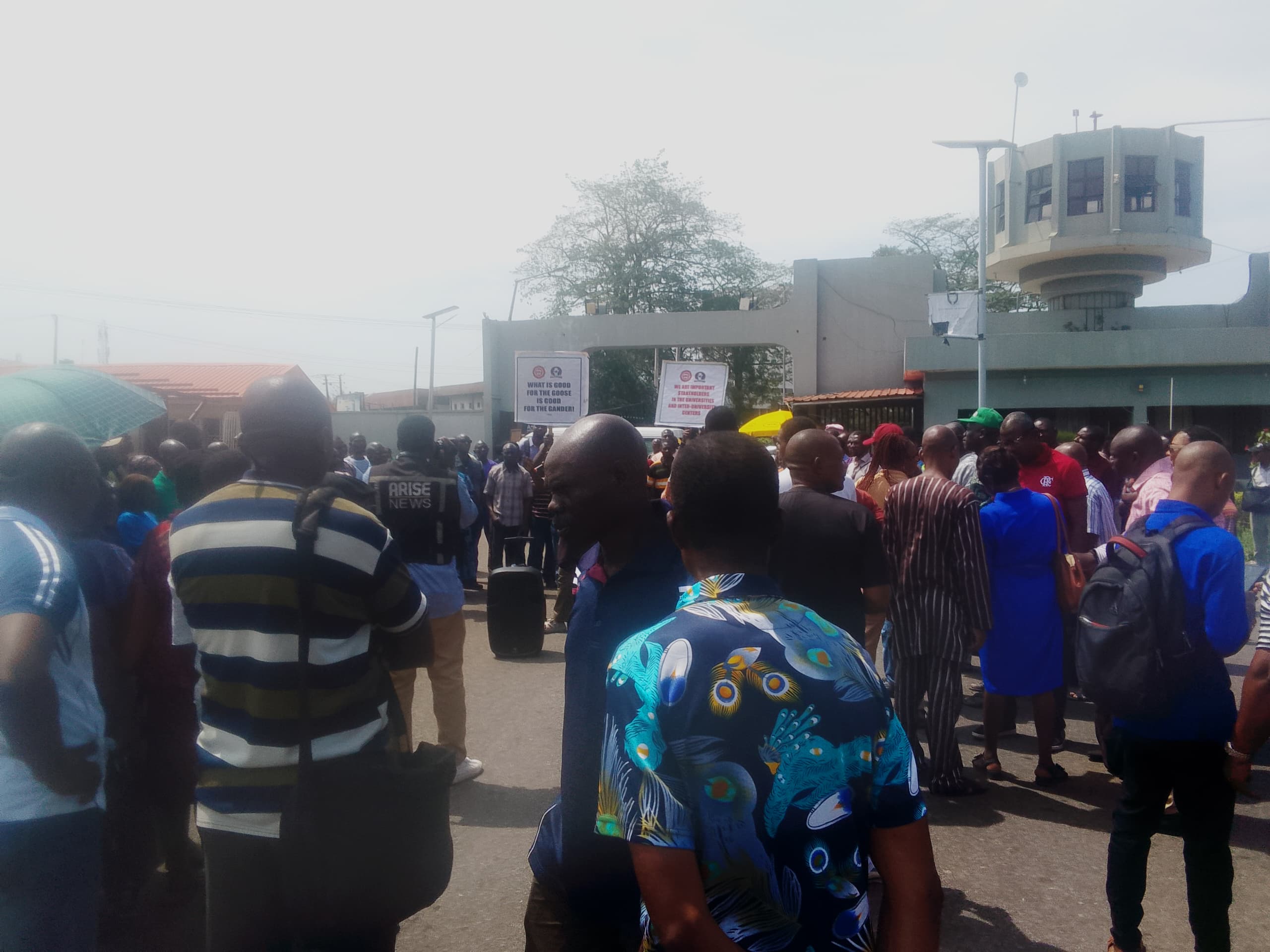
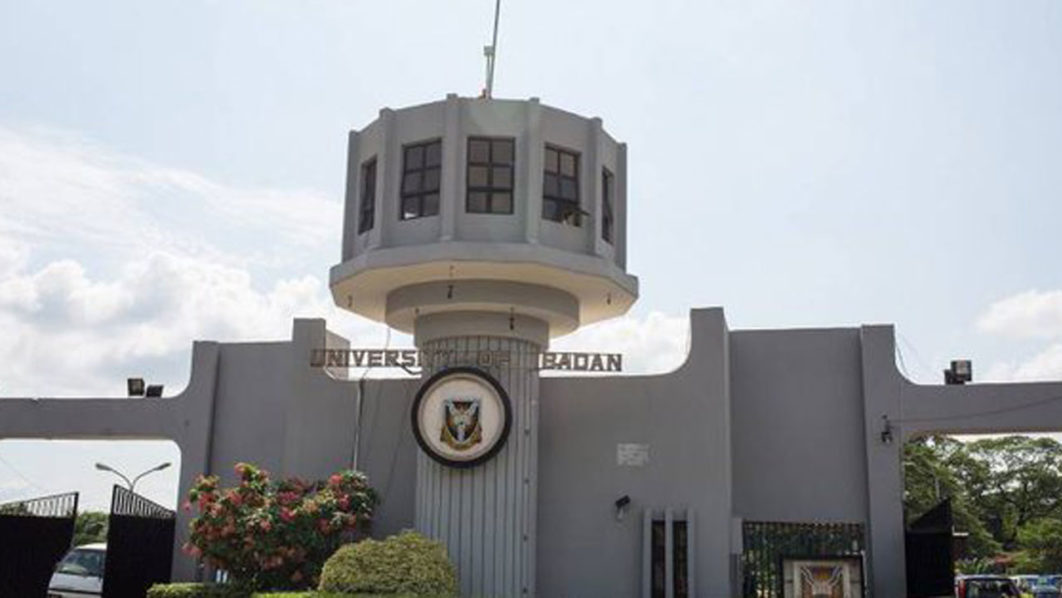
Activities at the University of Ibadan have been disrupted following the commencement of an indefinite nationwide strike by members of the Senior Staff Association of Nigerian Universities (SSANU) and the Non-Academic Staff Union (NASU).
As observed by IndyPress, some lecture theatres and campus facilities like the University Health Service (Jaja Clinic), hostels were shut or operating at minimal capacity, as non-academic staff withdrew their services in compliance with the strike directive.

The Joint Action Committee (JAC) of both unions held a congress at the university’s main gate to sensitise members on the enforcement of the strike.

In an interview with IndyPress, the SSANU UI Secretary, Mr Charles, confirmed that the action follows a directive from the national leadership of the unions.
“We received a directive from our national leadership to commence a total and comprehensive strike from May 1. Today is effectively the first working day after the holiday, which is why we are holding this congress,” he said.
He stressed that the strike is total, with no exemptions across any sector of the university.
“Unlike previous strikes where essential services continued, this time nobody is exempted. Everybody is expected to withdraw their services,” he noted.
 According to him, the strike stems from the Federal Government’s failure to conclude the renegotiation and implementation of the 2009 agreement with non-teaching staff unions.
“The issue leading to this strike is that negotiations between the Federal Government and the university-based unions are still ongoing. While the government has concluded negotiations with ASUU since January, the negotiations with NASU, SSANU and NAAT have not been concluded,” he said.

He added that a recently circulated memo announcing a 30 percent salary increment was later withdrawn, reinforcing concerns that negotiations remain inconclusive.
“About two weeks ago, we saw a memo on social media from the Minister of Education stating that the President had approved a 30% salary increment for non-teaching staff. However, that circular was later withdrawn, and we saw it as an indication that negotiations were still ongoing and not yet finalized.”
“We were not convinced by the government’s assurances, and that is why the strike is ongoing. It will only be called off when our demands are met,” he said.
The union warned that the withdrawal of services would significantly impact critical areas of the university, including electricity supply, water distribution, facility maintenance, and administrative processes.
On the impact of the strike on UI, NASU Chairman Mr Ogulade Oluwafemi Michael, noted that while unions had previously exercised restraint due to the impact on students, the current situation would have far-reaching consequences.
“Before now, let me say we are like parents. When I say parents, I mean we have feelings for the students. Many of us have children in one institution or another. A student plans to spend four years in the university, but because of industrial actions, it stretches to 5-7 years.”
“Because of that, we used to be considerate. Most times when we say we want to go on strike, students believe we won’t follow through, and we return quickly because we feel for them. But this time, with the situation, it is going to have a serious effect.”
He also stressed that taking effect from tomorrow activities on campus will be totally affected.
“After today, we will not allow lecture rooms to be open. Once lecturers stop lecturing, that is the end of academic activities. But beyond that, if this strike continues, you will feel it deeply.”
“We are the ones who provide water. We maintain the lecture rooms. We process results. We ensure electricity supply. We make the university environment conducive for everyone.”
“The moment we withdraw our services, everything becomes difficult. No light, no water, everything shuts down.”
“A lecturer may decide to teach you under sunlight, that is possible. They can even conduct exams and mark scripts. But after that, it comes back to us. We handle the processing, the documentation, everything that follows. So when we are on strike, the university system suffers.”
“As we begin now, the environment will be affected seriously. We are already addressing our members on how to go about it. If we decide to shut the gates or block access, nobody; insiders or outsiders, will be able to enter.”
The strike, which commenced at midnight on May 1, follows the expiration of an ultimatum issued to the Federal Government to conclude negotiations with non-teaching staff unions.
The industrial action affects federal and state universities, as well as inter-university centres nationwide.
This News is a joint coverage by ASSESA press and IndyPress

You must be logged in to post a comment.