


By Diran Laolu
The New Campus Pressure
Among young people on university campuses today, there is a quiet but powerful trend: students constantly evaluating their bodies. For some, it is the fear of gaining weight; for others, it is the relentless pursuit of sculpted muscles and the pressure to build a “perfect” physique, especially well-defined biceps. Beneath the surface lies a deeper issue, the growing pressure to meet unrealistic body standards.
In this interview, IndyPress correspondent Diran Laolu speaks with gym instructor Mr. Babatunde Adediran, who sheds light on the ideal approach to exercise, the physical and psychological impact of unhealthy trends, and what students can do differently.
Many students feel pressured about their body image. Some focus heavily on building biceps through the gym. What is your professional opinion on this?

Bodybuilding depends on the individual, but there are different types of training. Developing specific muscle groups like the triceps or shoulders is a distinct process from building the upper body or chest; it depends on each person’s structure and what they want to achieve. Building is a process; if you want to develop your upper body, you start there, using dumbbells or other equipment. Every individual needs to know their goal and focus before coming to the gym. That is why I don’t say, “Because he is doing this, you should do the same.” What is your focus? What do you want to achieve?
For someone like me who is new to the gym but interested in working out, what would be your advice?
Everyone should be mature enough to know what they want, because goals vary from person to person. If someone wants general fitness, we start from a baseline suited to their body structure. You cannot compare yourself to others; everyone starts somewhere and progresses gradually. If you are unsure, we will explain the purpose of each machine and guide you through the process.

What is your view on people who have issues with their weight and diet in excess?
Nobody should have issues with weight unless that person is obese. There are different classes of obesity: Obese one, Obese two, Obese three. That is why coming to the gym serves three purposes: one, to shed weight; two, to keep fit; and three, to build the body. It all depends on where you are going. Every individual must know this: being overweight doesn’t mean you can’t build your body, but the first question is whether the fat exceeds the weight you want to gain. For example, if someone is 90 kg and wants to build their body, they risk becoming a “Michelin man.” There’s a tendency to need to reduce weight first before building muscle.
So what about the way people eat in relation to their diet?
Dieting is another aspect of exercise. That is why there are dietitians and nutritionists. In Human Kinetics, there’s Human Kinetics and there’s Health Education; I’m a kinetics major, while people on the Health side can tell us what to eat and what not to. But the main thing I know is that whether you’re shedding weight or keeping fit, there are things you shouldn’t eat. Number one, don’t take too many carbonated drinks: Coca-Cola, Pepsi, all of that, you don’t need them. Junk food like meat pie, egg rolls, and sausage rolls, along with too many carbohydrates, causes a lot of problems whether you’re shedding weight or building the body.
Some people fear gaining weight and develop eating disorders because they don’t want to lose their body shape. What is the effect of this?
Diet is one of the major aspects of physical exercise, whether you’re gaining or losing weight. You can’t spend one hour in the gym and then drink a bottle of Coca-Cola; everything you’ve done in the gym is wasted. Whatever exercise you do, if you don’t watch your intake, it’s a problem. Even one small sausage roll can undo what you’ve achieved through a whole workout.
Can you expand more on dieting in relation to weight gain?
Every individual must watch their intake, whether they’re building or shedding, even if they’re not exercising at all. I have a client who says even if she sleeps too much, she gains weight from excess rest. A lot depends on body structure and body composition. Some people who eat garri three times a day will still get fat, while someone else eating the same garri every day might not gain weight. So it depends on the individual’s body structure and components; you can’t say one person has a tendency to become fat while another doesn’t. Family heredity plays a role too.
Are there any psychological effects that come with physical exercise?
Yes. We believe in every individual’s opinion and belief. Psychologically, you might think, “If I’m jogging, I can shed weight, so why come to the gym?” But in everything you do, consistency is key. If you jog outside, will you be consistent? Say you want to jog from here to the main gate and back in five or ten minutes without stopping to greet anyone or do anything else; will you manage that? The difference between jogging outside and training in the gym is that the gym is programmed. If you decide to train for 20 minutes, you go straight through that 20 minutes, unless you stop because of the intensity of the work. Outside, someone can greet you mid-run and interrupt you, and psychologically you feel you should respond. In the gym, as long as you’re following the machine’s timer, you can choose not to engage, and so can the people around you.
For people who don’t know much about the gym, can you educate them a bit?
Like I said earlier, everything depends on your individual interest. We believe in your individual opinion and decision. Even coming to the gym requires two things: consistency and determination. You decide what you want to do, and you stay consistent in doing it. So when you come to the gym, we ask: why are you coming? What is your goal? What do you want to achieve? Maybe you want to look like someone, or maybe you just want to be fit. That’s the reason.
Some people simply aren’t fit; they lack stamina, can’t even walk from the school gym to the main gate. Sport activities help build that strength and stamina, so a light push doesn’t knock you over. A lot is gained through physical exercise.
If someone wants to join and start working out in the gym, what’s the process?
We have a subsidized rate for students. All you need is your school fees receipt and ID card. An outsider doesn’t need to bring anything beyond a passport photo and pays a different fee. A staff member still undergoing a course, whether a master’s or a PhD, still pays as a student.
If I go to Jaja Clinic, can they recommend me to come here?
Not quite; it works differently. We have our own small clinic here where minor injuries can be treated before a referral to Jaja if needed. But Jaja doesn’t recommend people here, since they have their own physiotherapy clinic as well.

What’s the difference between physiotherapy and human kinetics?
They study the same thing, essentially: the human body. But physiotherapy goes deeper in some respects than human kinetics.
For someone who want to use the gym, is there any drug that people take?
They don’t use drugs.
But is there any caution against drug abuse?
Yes. That’s why I tell my clients: if you’re starting the gym for the first time, you might encounter some body pain. But if you turn to drugs the second time you feel that pain, that’s a problem; endurance is what’s needed instead. You need to endure the pain when starting something new, whether the body reacts positively or negatively. Over time, the body adapts and begins to accept the routine as something it does every two or three days. But it’s not advisable to reach for specific drugs just because of body pain.
What does the test before you start gyming involve?
Just a physical test: your height, weight, blood pressure, pulse, and other basic checks.
What’s your advice to students who use gyms around the hostels with nobody there to guide them?
That’s why you need a standard gym. In a lot of the gyms around, the weights aren’t properly measured; I’ve been to one gym where they used the rim of a car tire as a bar. You can’t tell what weight you’re lifting that way. In a standard gym, the weights have numbers, so you know exactly what you’re carrying: 5 kg, 10, 15, 20. Every individual must know their limit.
Nobody adds the weight for you; it’s up to you to ask, “Can I carry this? This is 15. Another 15 makes 30; can I carry 30 kg?” Not because someone else is carrying it, but because you know your own limit. Outside, improvised equipment means you don’t know what weight you’re carrying, and that can injure your body. Tissues can be damaged, and a lot can go wrong.
What about older individuals: lecturers or postgraduate students who have their own house and want a gym at home?
Having a gym at home is good, but the real challenge is making yourself use it. I know a professor with a big treadmill at home who struggles to actually use it. Some people can’t just decide to use it for 10 or 20 minutes; they’d rather sit and read instead. If a professor or an HOD can leave the office and come here at four o’clock, that shows they understand the value of exercise.
Is there a particular age benchmark for gyming?
As old as possible and as young as possible. University students can start from age 16; we don’t take anyone below that. We go from 16 to 70 or 80. Outsiders below 16 aren’t allowed, but outsiders above 70 are welcome, with different exercises suited to their age. You can’t have a 70 or 80 year old lifting the same weights as a young person; that could be dangerous.
So this is your gym, sir?
No.
What is it called?
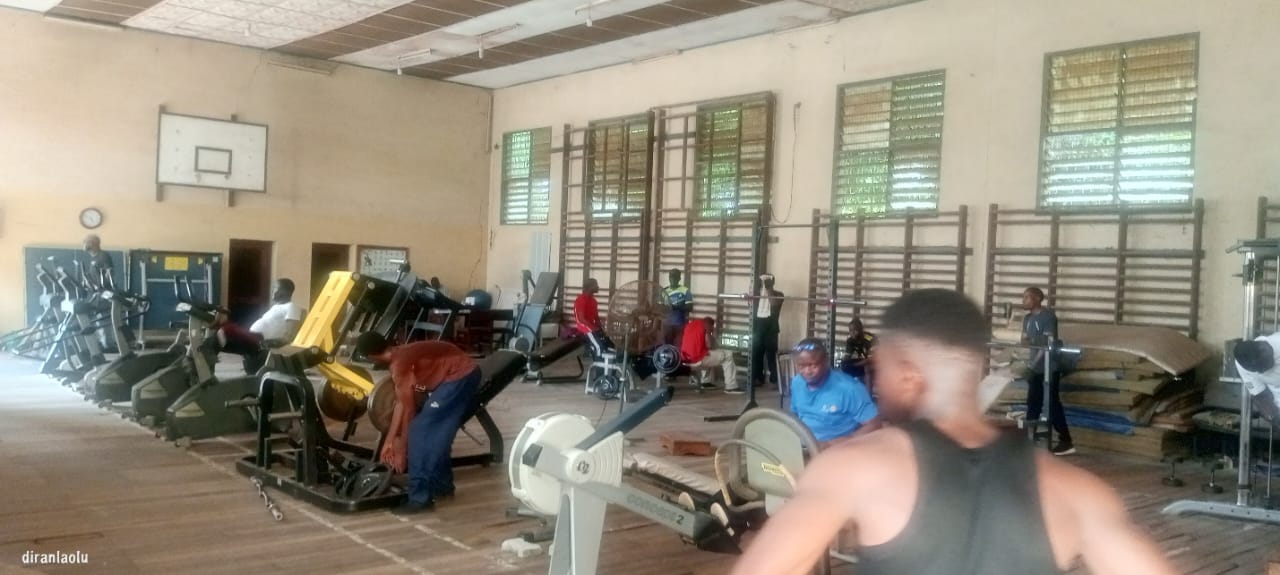
Gamaliel Onosode Gym.

Gamaliel Onosode Gym! Who is he?
Gamaliel Onosode was the former Pro-Chancellor and Chairman of the Council from 2005 to 2007. To celebrate a graduation anniversary, he encouraged donors to give money to the university rather than spend it on food and drinks. The university then invited proposals for projects, and our gym proposal was approved and named in his honor.
So it’s under the Department of Human Kinetics?
No, this is under the Sports Council. There’s a sports center in the university, with a director, a chairman of the sports council, and coaches.
The conversation around body image among students is more urgent than ever. The pursuit of the “perfect body” is costing students more than they realize. A healthier generation begins with informed choices and a redefinition of what it truly means to be “fit.” In a world full of pressures, perhaps the real goal should be simpler: to be healthy, confident, and comfortable in one’s own skin.


You must be logged in to post a comment.